Source Hydraulic Linear Guide Rail for Packaging, Medical, and Automation
Find 30 hydraulic linear guide rail options for packaging machinery, medical equipment, and industrial automation. Compare specifications like HGW25CA and HGR15 models, precision grades, and corrosion resistance to select the right linear motion solution for your application; compare the available evidence and request quotations based on your requirements.
Key considerations
Products List




Comprehensive Sourcing Guide
Hydraulic Linear Guide Rail Sourcing Guide
Procuring hydraulic linear guide rails requires a nuanced understanding of how fluid power integrates with precision motion control. While the core keyword suggests a specific mechanical interface, the market often lists these components under broader categories such as CNC linear guides, slide rails, and linear motion transmission systems. Buyers must recognize that "hydraulic" in this context often refers to the actuation method driving the linear guide, rather than the guide rail itself being a hydraulic component. The supplied data indicates a strong presence of solid and T-profile rails with high corrosion resistance, which are critical for environments where hydraulic fluids may leak or where washdown procedures are frequent. Understanding this distinction prevents miscommunication with suppliers who may list standard ball screw-driven or motor-driven linear guides that are merely used in hydraulic presses or lifting tables.
The observed product landscape reveals a wide variance in specifications, from 25mm guide widths to support rail lengths extending up to 4000mm, with some origins citing maximum lengths of 6000mm. This variability suggests that buyers are not purchasing a single off-the-shelf item but rather configuring a motion system. The presence of interchangeable parts with major brands like Hiwin indicates a mature supply chain where compatibility is a primary concern. However, the term "hydraulic linear guide rail" may also encompass heavy-load applications such as workshop cranes, warehouse cranes, and shipboard cranes, where the linear motion is powered by hydraulic cylinders rather than electric motors. Buyers must clarify whether they need the guide rail component itself or the entire hydraulic actuator assembly, as the sourcing strategy, technical verification, and compliance requirements differ significantly between these two interpretations.
Product Scope and Observed Listing Signals
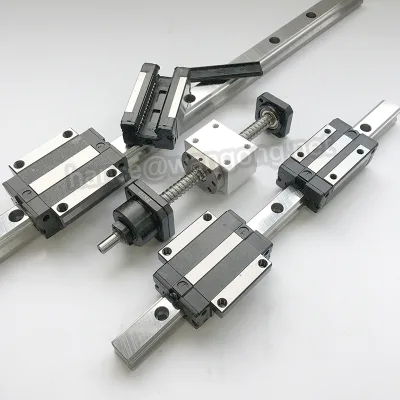
The current market listings for linear motion components exhibit a diverse range of profile types, including solid profiles and T-profiles, which serve different structural and mounting needs. Solid profiles are typically preferred for heavy-load applications requiring high rigidity, while T-profiles offer flexibility in mounting configurations for lighter or more complex assemblies. The observed listings highlight a focus on high corrosion resistance, a critical feature for hydraulic environments where oil mist, moisture, or chemical exposure can degrade standard steel components. Buyers should verify if the surface treatment includes polishing or specialized coatings, as the supplied data notes polished surfaces as a common attribute. This visual and tactile finish is not merely aesthetic; it reduces friction and prevents debris accumulation, which is vital for maintaining the smooth operation required in precision machinery.
Interchangeability is a dominant signal in the current supply base, with many products claiming compatibility with established brands like Hiwin. This suggests that buyers can source cost-effective alternatives without sacrificing fit or function, provided they verify the precise model numbers such as HGW25CA sliders or HGR15 linear guides. The presence of standard blocks like HGH25CA further supports the idea that modular components are the norm. However, buyers must be cautious with these claims, as "interchangeable" does not always guarantee identical performance under high hydraulic pressure. The listings also show a variety of precision grades, ranging from P Grade to specific numerical grades like 1, 2, 3, 4, and 5. This range indicates that buyers can select components based on their specific tolerance requirements, from general industrial automation to high-precision medical equipment or electronics manufacturing, where even microns of deviation can impact product quality.
Technical Specifications to Verify
When evaluating linear guide rails for hydraulic applications, the load type and bearing mechanism are paramount. The observed data specifies "Heavy Load" capabilities and "Linear Motion" bearings, which typically involve recirculating ball or roller systems. Buyers must verify the dynamic and static load ratings to ensure the rail can withstand the forces generated by hydraulic actuators, which can be significantly higher than those from electric motors. The support rail length, observed to range from 100mm to 4000mm, must be matched to the stroke length of the hydraulic cylinder. Additionally, the guide width, such as the 25mm width noted in the data, determines the cross-sectional rigidity. Buyers should confirm that the selected width provides sufficient stability against moment loads, which are common in hydraulic presses and lifting mechanisms where off-center forces are applied.
Precision and interchangeability are critical technical factors that directly impact machine performance. The listings mention "P Grade" precision and compatibility with specific models like HGW25CA and HGR15. Buyers must verify the actual precision grade of the received goods, as "P Grade" is a broad category that may encompass several sub-grades. It is essential to request detailed dimensional drawings and tolerance charts from the supplier to ensure that the slide rail and slide block structure will fit seamlessly into existing machinery. Furthermore, the driven type, often listed as "Ball Screw Motor," may not be directly relevant to hydraulic systems, so buyers must clarify if the linear guide is intended to work in tandem with a hydraulic cylinder. Verifying the running mode, whether it is a moving block or moving rail configuration, is also necessary to ensure proper integration with the hydraulic power unit and control system.
Compliance and Safety Documentation
Certification status is a primary indicator of a supplier's manufacturing consistency and quality management systems. The observed listings frequently cite ISO 9001, with some specifying ISO 9001:2000 or ISO 9001:Corrosion Resistance. Buyers should verify the current validity of these certifications, as ISO 9001:2000 is an outdated standard and may indicate a supplier who has not updated their quality management system in recent years. The presence of CE marking is also noted, which is mandatory for products sold in the European Economic Area. Buyers must ensure that the CE declaration of conformity is provided and that it covers the specific mechanical hazards associated with linear motion components, such as pinch points and ejection risks. This documentation is crucial for integrating the linear guides into larger machinery that will undergo final CE certification.
Beyond general certifications, specific safety and material compliance documents are essential for hydraulic applications. Hydraulic systems often operate under high pressure, and any failure in the linear guide can lead to catastrophic machine failure. Buyers should request material test reports to verify the composition of the steel used in the rails and blocks, ensuring it meets the hardness and fatigue strength requirements for heavy-load applications. Additionally, if the linear guides are used in food processing or medical equipment, as noted in the application lists, buyers must verify compliance with relevant hygiene standards. This may include documentation regarding the absence of harmful substances in lubricants or coatings. The "Insulating" and "Antiseptic" features mentioned in some listings suggest specialized coatings, and buyers should request technical data sheets to confirm the effectiveness and durability of these properties under continuous hydraulic exposure.
Cost Drivers and Commercial Terms
The cost of linear guide rails is influenced by several factors, including material quality, precision grade, and surface treatment. The observed price range of 0.1 to 2100 USD reflects the vast difference between small, low-precision components and large, high-precision, heavy-load systems. Buyers should understand that lower prices may correlate with lower precision grades or less rigorous corrosion resistance treatments. The customization availability noted in the listings can also impact cost, as custom lengths or special coatings often incur additional setup fees. MOQ values ranging from 1 to 100 pieces indicate flexibility for both prototyping and large-scale production, but buyers should be aware that ordering below the MOQ may result in higher per-unit costs or longer lead times.
Packing and shipping terms are significant cost drivers, especially for international procurement. The observed packing methods, including PVC bags, wooden boxes, and export-standard packing, highlight the need for rust protection during transit. Hydraulic environments are sensitive to corrosion, so any damage to the protective coating during shipping can render the components unusable. Buyers should verify if the packing includes desiccants and vapor-corrosion inhibitors, particularly for shipments from regions with high humidity. The mention of "Have to Be Rust Protected and Packed for Over Sea" suggests that standard packing may not be sufficient for long-distance transport. Additionally, buyers should clarify who bears the cost of packaging materials and whether custom packaging for specific machinery integration is available, as this can affect the overall landed cost and installation efficiency.
Supplier Qualification and Quality Control
Supplier qualification begins with verifying the origin and manufacturing capabilities of the provider. The observed origins, including Zhejiang and China Nanjing, indicate a concentration of manufacturing hubs in China. Buyers should assess the supplier's production capacity and quality control processes to ensure consistency, especially when sourcing interchangeable parts. The claim of interchangeability with Hiwin parts requires rigorous verification, as even minor deviations in rail straightness or block preload can affect performance. Buyers should request samples for testing before committing to large orders, focusing on dimensional accuracy and surface finish. The presence of ISO 9001 certification is a baseline requirement, but buyers should also inquire about internal quality control measures, such as in-process inspections and final testing protocols.
Quality control extends to the verification of performance attributes such as smooth operation and load capacity. Buyers should establish clear acceptance criteria based on the observed specifications, such as the 25mm guide width and 5-meter or 4-meter lengths. It is essential to define acceptable tolerances for straightness, parallelism, and preload, as these factors directly impact the smooth operation of the linear guide. Suppliers should provide inspection reports for each batch, including measurements of key dimensions and hardness tests. For heavy-load applications, buyers may request proof of load testing or fatigue testing to ensure the components can withstand the operational stresses of hydraulic machinery. Establishing a robust quality control process with the supplier helps mitigate the risk of receiving defective components that could lead to machine downtime and costly repairs.
Long-Term Procurement Checks
Long-term procurement success depends on the availability of spare parts and the consistency of supply. The modular nature of linear guides, with standard blocks like HGH25CA and sliders like HGW25CA, facilitates easier maintenance and replacement. Buyers should ensure that their suppliers can provide these standard components consistently over the lifecycle of the machinery. This is particularly important for hydraulic systems, where wear and tear on the linear guides may require periodic replacement. Buyers should also verify the supplier's ability to provide technical support and troubleshooting assistance, as issues with linear motion can be complex and require expert diagnosis. Establishing a long-term relationship with a reliable supplier ensures that replacement parts are available when needed, minimizing downtime.
Sustainability and supply chain resilience are also critical considerations for long-term procurement. Buyers should assess the supplier's ability to maintain production during market fluctuations or supply chain disruptions. The observed variety of applications, from packaging machinery to shipboard cranes, suggests that suppliers with diverse customer bases may be more resilient. Buyers should also consider the environmental impact of the materials and processes used, particularly if the linear guides are used in eco-sensitive industries. Verifying the supplier's commitment to sustainable practices, such as efficient resource use and waste reduction, can align with broader corporate sustainability goals. Regularly reviewing supplier performance and market trends helps buyers adapt to changes in technology and demand, ensuring that their hydraulic linear guide rail procurement strategy remains effective and competitive.
FAQs
What certifications do the linear guide rails have?
The products hold ISO 9001 and CE certifications to ensure quality standards. Some listings also reference ISO 9001:2000 compliance. These certifications verify that the manufacturing processes meet international requirements for reliability and safety in industrial applications.
Which customization options are available for these guides?
Customization is available to meet specific buyer requirements for unique applications. Buyers can request tailored specifications for packaging machinery or medical equipment. This flexibility allows for adapting the solid or T-profile rails to distinct operational needs.
How long are the standard support rails provided?
Standard support rails are available in lengths ranging from 100 to 4000 millimeters. Specific models may also come in fixed lengths of 4 or 5 meters. This variety supports different installation requirements for heavy load applications in automation.
Can these rails be interchanged with Hiwin parts?
Yes, the blocks are designed to be interchangeable with Hiwin parts for easy replacement. The HGW25CA slider and HGH25CA block standards ensure compatibility. This feature simplifies maintenance and upgrades for existing machinery using similar linear motion systems.
What is the minimum order quantity for purchasing?
The minimum order quantity starts at just one piece for many items. This low MOQ allows buyers to test products before committing to larger orders. It is suitable for small workshops or initial prototyping phases in electronics manufacturing.
Where are these hydraulic linear guide rails manufactured?
The products originate from Zhejiang and Nanjing in China. These locations are known for producing industrial automation components. The goods are packed in wooden boxes or PVC bags for export standard shipping.
What surface treatment is applied to the guide rails?
The rails undergo a polished surface treatment to ensure smooth operation. This finish enhances corrosion resistance for use in food processing or medical equipment. The polished surface reduces friction and extends the service life of the linear motion transmission.